Python3, Using some shared state in 2 async methods

Python logoThe asyncio module was added to Python in version 3.4 to “provides infrastructure for writing single-threaded concurrent code using coroutines, multiplexing I/O access over sockets and other resources, running network clients and servers, and other related primitives”. If you want an introduction to asyncio take a look at this blog post.

This post will look at how to share state between multiple async methods that may be running at the same time without using anything silly like globals. The examples should be easy to follow and easy to extrapolate from. Also I’ll be embedding trinket.io  code snippets which you should be able to run in the browser.

Disclaimer: I don’t really write much python so there might be better solutions. This post is only meant to serve as a consolidation of knowledge to be passed to another.

Read more

The Wikimedia Server Admin Logs

The Wikimedia Server Admin Log or SAL for short is a timestamped log of actions performed on the Wikimedia cluster by users such as roots and deployers. The log is stored on the WikiTech Wikimedia project and can be found at the following URL: https://wikitech.wikimedia.org/wiki/Server_Admin_Log

An example entry in the log could be:

09:04 addshore: addshore@terbium:~$ for i in {1..2500}; do echo Lexeme:L$i; done | mwscript purgePage.php --wiki wikidatawiki

As well as the main cluster SAL there are also logs for release engineering (jenkins, zuul, and other CI things) and individual logs for each project that uses Wikimedia Cloud VPS.

A tool has been created for easy SAL navigation which can be found at https://tools.wmflabs.org/sal

Each SAL can be selected at the top of the tool, with ‘Other’ providing you with a list of all Cloud VPS SALs.

The search and date filters can then be used to find entries throughout history.

Read more

Customizing Wikibase config in the docker-compose example

2019 Edit: If you want to use a Dockerfile and custom image take a look a here.

Just over a month ago I setup the Wikibase registry project on Wikimedia Cloud VPS using the docker-compose example provided by Wikibase docker images. The Wikibase registry is the first Wikibase install that I control that uses the Wikibase docker images, so I’ll be using it as an example showing how the docker images can be manipulated to configure MediaWiki, Wikibase, and load custom extensions and skins.

The example docker-compose file at the time of writing this post can be found at https://github.com/wmde/wikibase-docker/blob/5919016eac16c5f0aefc448240fdf6a09bb56bec/docker-compose.yml

Since the last blog post new wikibase image tags have been created (the ‘bundle’ tags) that include some extensions you might want to enable, as well a quickstatements image for the quickstatements service used on Wikidata written by Magnus Manske.

Read more

Wikibase of Wikibases

The Wikibase registry was one of the outcomes of the first in a series of Federated wikibase workshops organised in partnership with the European research council.

The aim of the registry is to act as a central point for details of public Wikibase installs hosted around the web. Data held about the installs currently includes the URL for the home page, Query frontend URL and SPARQL API endpoint URL (if a query service exists).

During the workshop an initial data set was added, and this can be easily seen using the timeline view of the query service and a query that is explained within this post.

Read more

2017 Year Review

This entry is part 1 of 7 in the series Year Reviews

2017 has been a great year with continued work at WMDE on both technical wishes projects and also Wikibase / Wikidata related areas. Along the way I shared a fair amount of this through this blog, although not as much as I would have liked. Hopefully I’ll be slightly more active in 2018. Here are … Read more

WMDE: CI, Deploys & Config changes intro

This is an internal WMDE presentation made to introduce people to the land of Wikimedia CI, MediaWiki deployment and config changes. This briefly covers: Jenkins & Zuul CI Config Beta Cluster SWAT The MediaWiki train Monitoring mediawiki-config The Docker & Kubernetes future?

Wikidata Map March 2018

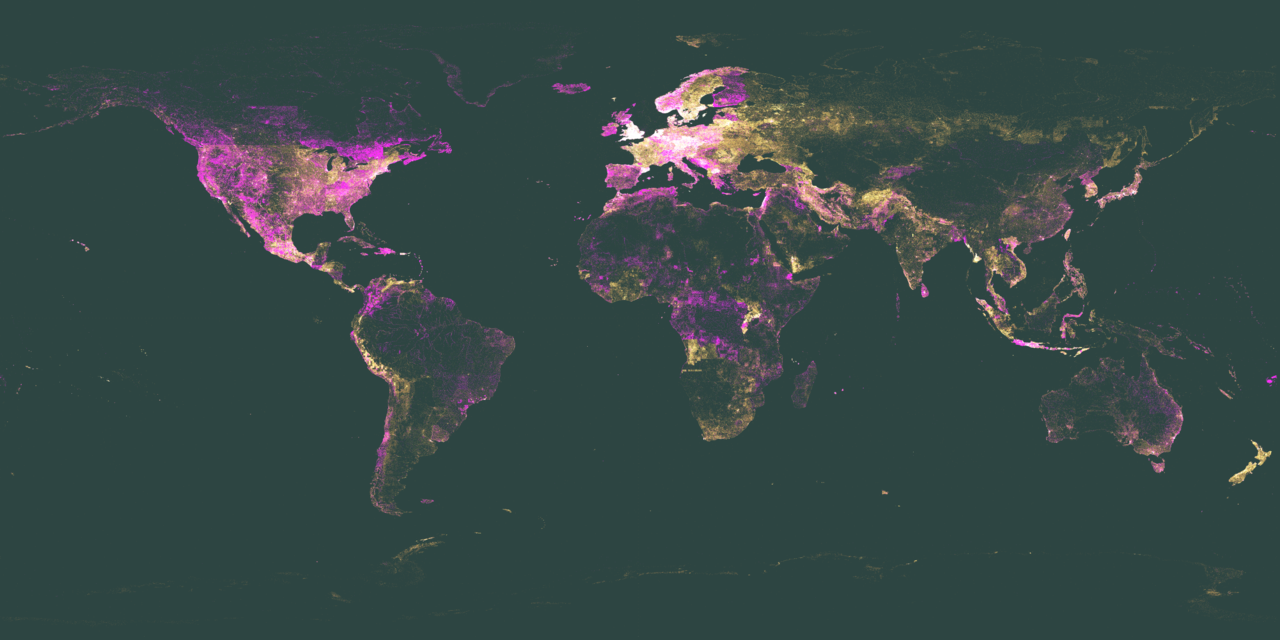
It’s time for the first 2018 installation of the Wikidata Map. It has been roughly 4 months since the last post, which compared July 2017 to November 2017. Here we will compare November 2017 to March 2018. For anyone new to this series of posts you can check back at the progression of these maps by looking at the posts on the series page.

Each Wikidata Item with a Coordinate Location(P625)will have a single pixel dot. The more Items present, the more pixel dots and the more the map will glow in that area. The pixel dots are plotted on a totally black canvas, so any land mass outline simply comes from the mass of dots. You can find the raw data for these maps and all historical maps on Wikimedia Tool Labs.

Looking at the two maps below (the more recent map being on the right) it is hard to see the differences by eye, which is why I’ll use ImageMagik to generate a comparison image. Previous comparisons have used Resemble.js.

Read more

From 0 to Kubernetes cluster with Ingress on custom VMs

While working on a new Mediawiki project, and trying to setup a Kubernetes cluster on Wikimedia Cloud VPS to run it on, I hit a couple of snags. These were mainly to do with ingress into the cluster through a single static IP address and some sort of load balancer, which is usually provided by your cloud provider. I faffed around with various NodePort things, custom load balancer setups and ingress configurations before finally getting to a solution that worked for me using ingress and a traefik load balancer.

Below you’ll find my walk through, which works on Wikimedia Cloud VPS. Cloud VPS is an openstack powered public cloud solution. The walkthrough should also work for any other VPS host or a bare metal setup with few or no alterations.

Read more

AggregateIQ Brexit and SCL

UPDATE 02/04/2018: Looks like AggregateIQ may have had a contract with Cambridge Analytica, but didn’t disclose it because of an NDA… But all spoilt by a unsecure gitlab instance.  https://nakedsecurity.sophos.com/2018/03/28/cambridge-analyticas-secret-coding-sauce-allegedly-leaked/


I wonder why AggregateIQ state that they have never entered a contract with Cambridge Analytica, but don’t mention SCL. Except they do mention they have never been part of SCL or Cambridge Analytica…

Channel 4 report on Brexit and AggregateIQ

From the AggregateIQ website & press release:

AggregateIQ is a digital advertising, web and software development company based in Canada. It is and has always been 100% Canadian owned and operated. AggregateIQ has never been and is not a part of Cambridge Analytica or SCL. Aggregate IQ has never entered into a contract with Cambridge Analytica. Chris Wylie has never been employed by AggregateIQ.
AggregateIQ works in full compliance within all legal and regulatory requirements in all jurisdictions where it operates. It has never knowingly been involved in any illegal activity. All work AggregateIQ does for each client is kept separate from every other client.

Read more

gitgraph.js and codepen.io for git visualization

I was looking for a new tool for easily visualizing git branches and workflows to try and visually show how Gerrit works (in terms of git basics) to clear up some confusions. I spent a short while reading stackoverflow, although most of the suggestions weren’t really any good as I didn’t want to visualize a real repository, but a fake set of hypothetical branches and commits.

I was suggested Graphviz by a friend, and quickly found webgraphviz.com which was going in the right direction, but this would require me to learn how to write DOT graph files.

Eventually I found gitgraph.js, which is a small JavaScript library for visualizing branching ‘things’, such as git, well, mainly git, hence the name and produce graphics such as the one below.

Read more