Where Do I Spotify?

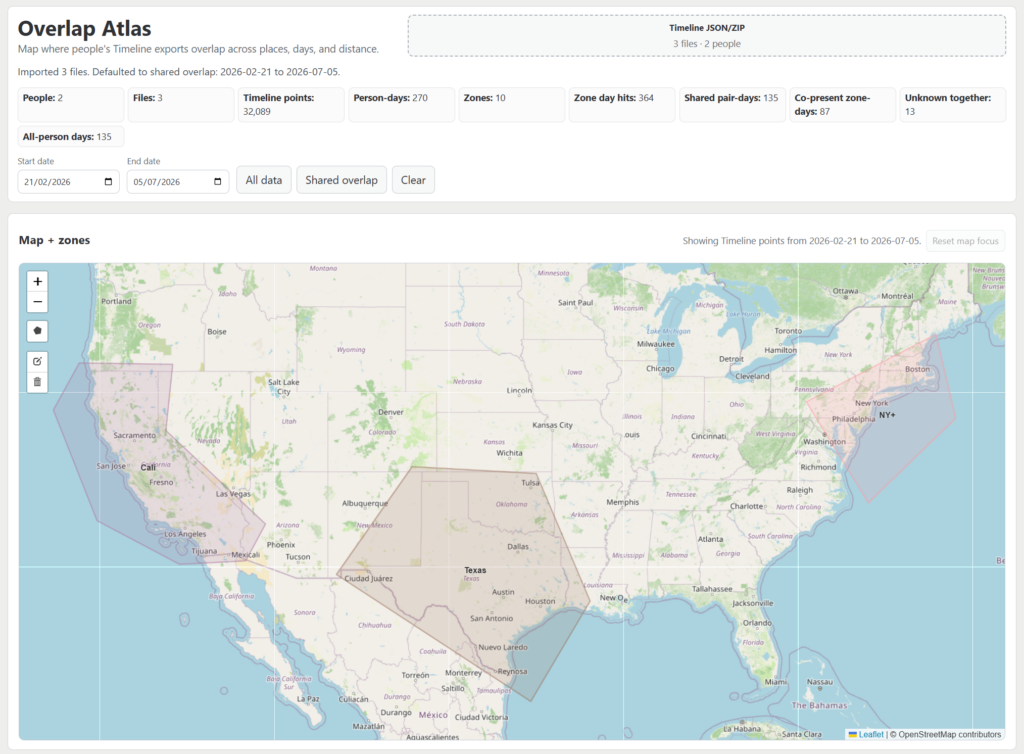
I’ve been a Spotify user for a long time, and like a lot of people I have Google Timeline enabled on my phone, quietly logging where I’ve been over the years. And at some point earlier this year I downloaded my Spotify listen data, and it occurred to me that Spotify plays + location information could be an interesting thing to look at… Do I listen to the same stuff at work as I do at home? What about when I’m in other countries? The hypothesis was that my listening habits might vary quite a bit by location, and I wanted a way to actually see that rather than just wonder about it.

So after some data squishing, location guessing, and UI magic, I now have a basic app that loads this data (browser only), allows you to draw some geofences around certain areas, and then look at your Spotify listening data based on that.

The core concept is pretty simple. Spotify lets you export your full streaming history, which is a JSON file full of play events with timestamps. Google Takeout gives you your location history, also a JSON file with timestamped location points. If you line those up by timestamp, you can figure out where you were when each song played.

Read more

The day Google (almost) lost my timeline data…

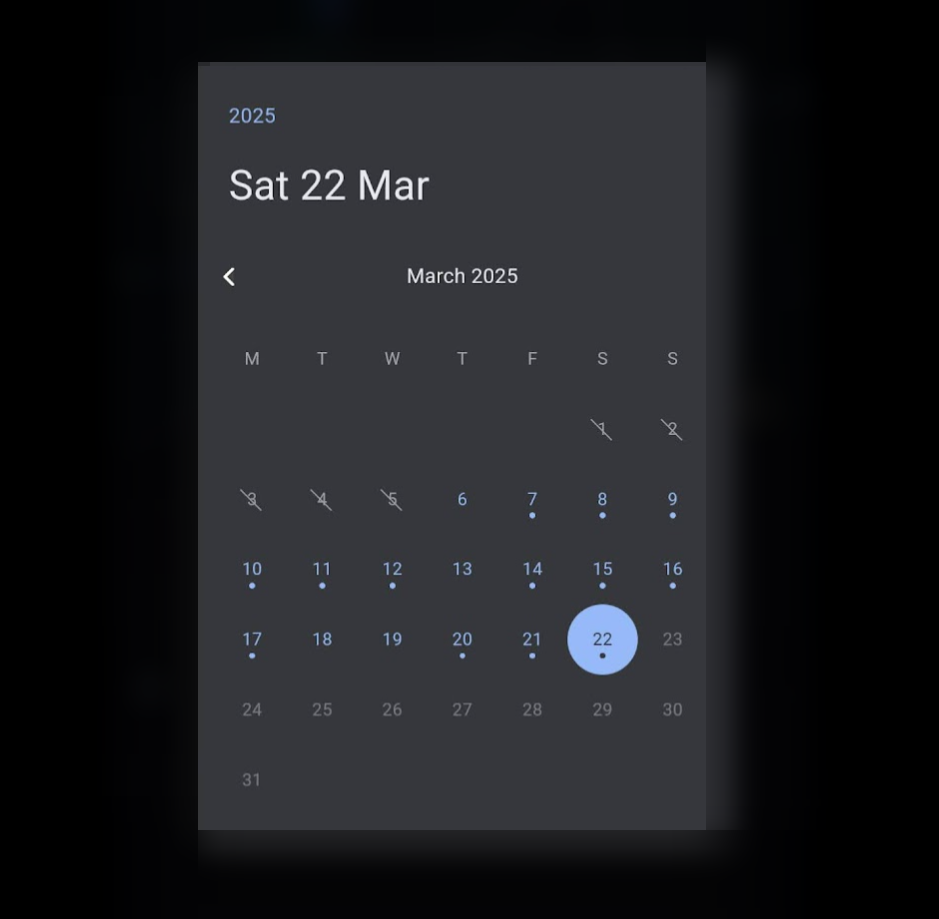
On the morning of 22nd March 2025 I received and read an email from Google giving me an “update” on my “Google Maps Timeline”, little did I know this was actually telling me they had just lost some of my data…

The email read…

We briefly experienced a technical issue that caused the deletion of Timeline data for some people. We’re reaching out as your account may have been impacted.
If you have encrypted backups enabled, you may be able to restore your data. Make sure that you have the latest version of Google Maps, then go to your Timeline. Tap the cloud icon near the top of your screen, and choose a backup to import your data. If you did not have backups turned on, unfortunately you will not be able to recover lost data.
We understand that this can be frustrating if you use Timeline to remember places that you’ve visited, and we are taking steps to improve our systems for the future.

I have heard of Google loosing data before (drive files and or photos disappearing and such), or making it inaccessible for people, and so far I’m glad to not have been affected, and have never really dived into these cases before to see if it has happened.

However, it was easy to see in a matter of minutes that ~10 years of location data was indeed gone from my phone… With data only showing from the 6th or 7th of March.

Read more

Installing Android Studio on WSL2 for Flutter

I’m trying to do some “modern” Android development and want to experiment with Flutter while running Windows, and WSL2 with Ubuntu.

Flutter isn’t as easy to install as some programs, no simple apt-get etc, but instead a collection of binaries distributed by different organizations that all need to be tied together.

To start with, you’ll want to read Installing Flutter 2.0 on WSL2 by Josh Kautz. This can guide you through getting Flutter and also the Android SDK with some copy & paste commands.

This post is inspired by these simple steps there to make this easy for folks to copy for Android Studio.

Read more

Wikimedia Commons Android App Pre-Hackathon

The Wikimedia Commons Android App allows users to upload photos to Commons directly from their phone. The website for the app details some of the features and the code can be found on GitHub. A hackathon was organized in Prague to work on the app in the run up to the yearly Wikimedia Hackathon which … Read more