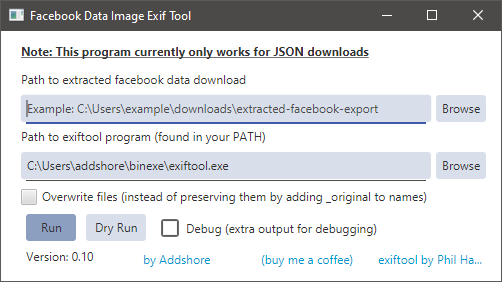
Add Exif data back to Facebook images – 0.10

Screenshot of the Facebook Exif tool version 0.10

In 2019 I wrote a post introducing a tool that I created to add Exif data back to images downloaded as part of a Facebook information download. The tool allowed me to download and delete my uploaded Facebook images while keeping some of the useful data such as date taken. After some Twitter pressure I have finally released an updated and slightly fixed version, and it’s time that I wrote a updated guide to go with it!

What is Exif data?

Exchangeable image file format (officially Exif) is a standard that specifies the formats for images and tags used by digital cameras and other systems handling image files.

Snipped from WIkipedia

Common Exif data for an image includes the time that it was taken, the camera make and model and the coordinate data for the location of the image.
Read more

Covid-19 Wikipedia pageviews, a first look

World events often have a dramatic impact on online services. A past example would be the death of Michael Jackson which brought down Twitter and Wikipedia and made Google believe that they were under attack according to the BBC.

Events like the COVID-19 (Coronavirus) pandemic have less instantaneous affect but trends can still be seen to change. Cloudflare recently posted about some of the internet wide traffic changes due to the pandemic and various government announcements, quarantines and lockdowns.

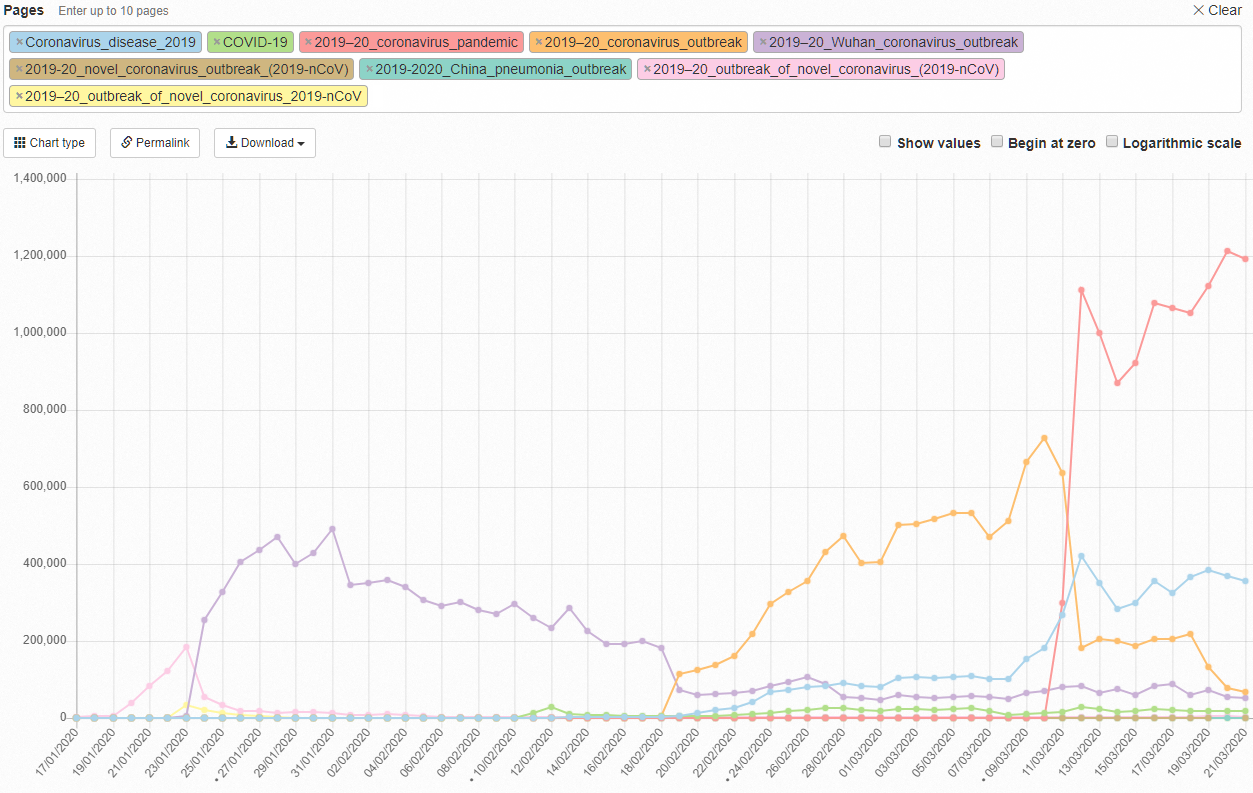
Currently the main English Wikipedia article for the COVID-19 pandemic is receiving roughly 1.2 million page views per day (14 per second). This article has already gone through 4 different names over the past months, and the pageview rate continues to climb.

Wikipedia pageviews tool showing English Wikipedia COVID-19 pandemic article views up to 21 March 2020 (source)

Read more

WBStack Infrastructure (2020)

This entry is part 3 of 12 in the series WBStack

UPDATE: You can find an up to date 2021 version of this post here.

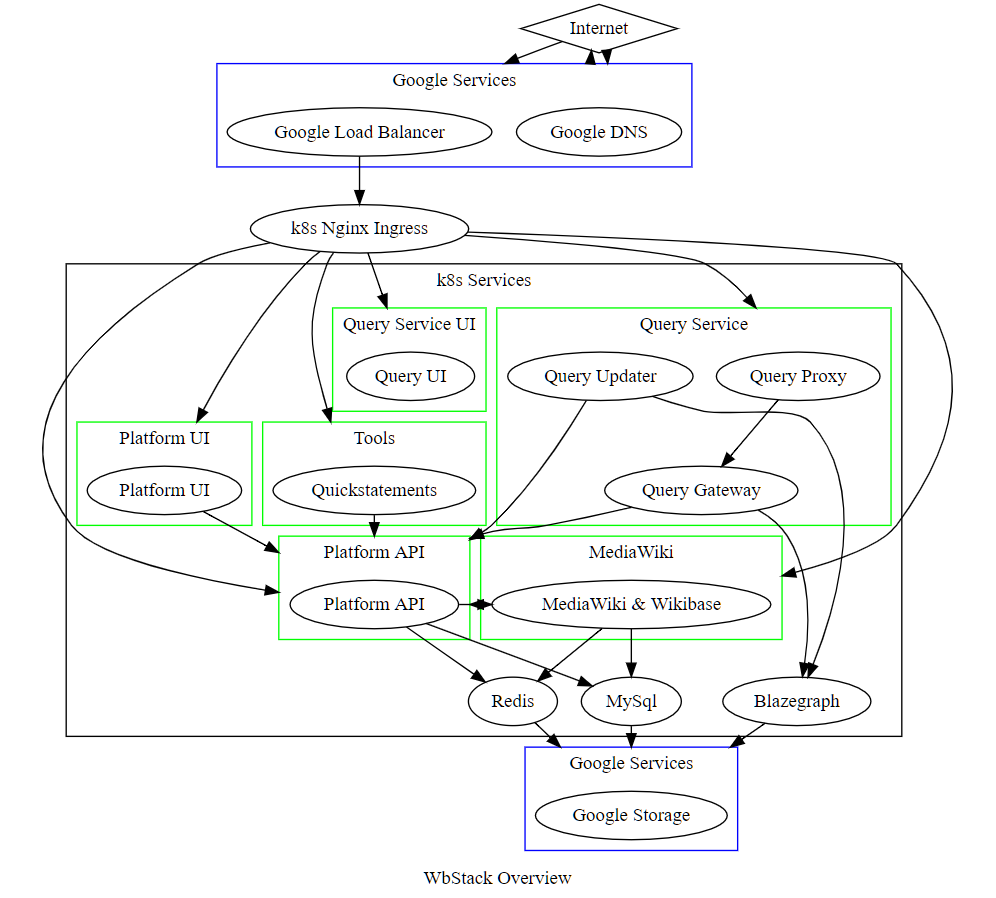
WBStack currently runs on a Google Cloud Kubernetes cluster made up of 2 virtual machines, one e2-medium and one e2-standard-2. This adds up to a current total of 4 vCPUs and 12GB of memory. No Google specific services make up any part of the core platform at this stage meaning WBStack can run wherever there is a Kubernetes cluster with little to no modification.

A simplified overview of the internals can be seen in the diagram below where blue represents the Google provided services, with green representing everything running within the kubernetes cluster.

Read more