WordPress plugins

Back in 2018 I wrote a post listing the WordPress plugins that I use on this blog. That post only received 122 views, but it was specifically written for some folks I know that are running WordPress blogs. Another friend (you know who you are) recently told me they were thinking of starting a blog, so here goes with a small update around the WordPress plugins I now use.

Generally, I would describe my blog as a developer blog, so there is quite a heavy focus on code, embedding code, security and making sure things are right with https and not leaving 404 pages behind.

Comparison

So what has changed in the last 3 years? 3 plugins have gone, and 8 have been added! And yes, this is a complete list.

Find links in the Notes & Discussion column where I dive into a few different categories of these plugins.
Read more

Dispatching custom event in Fitbit SDK

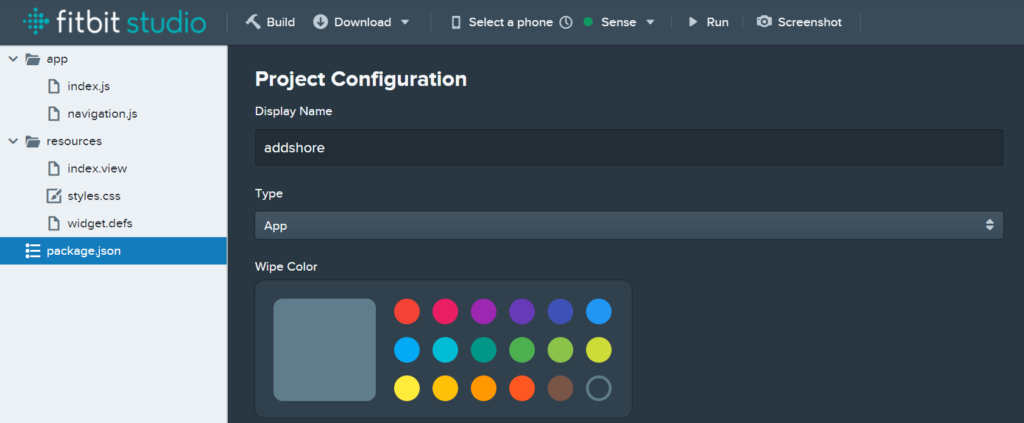
I just upgraded my Fitbit charge 2 from 2016, to a Fitbit sense from 2020. After getting everything set up I took a quick look at the developer documentation and found myself in a web based IDE called Fitbit studio and before I knew it I had sideloaded a development demo app onto my new device.

And before I knew it, I had another side project in my repertoire. Make a cool little app that does stuff, just for me!

While developing the ability to switch between various “pages” I encountered the need to dispatch events with custom data. Though seemingly the Fitbit SDK doesn’t use the Javascript norms here and needs a slightly different approach. So here is what I learnt.

Read more

Reflection on filling a new Wikidata item

A few days ago I watched a Twitch stream by Molly / GorillaWarfare where they created the Louis W. Roberts English Wikipedia page. I decided to follow along and populate the matching Wikidata item (Q109662645) with as much information as I could from the same references that were being found for the Wikipedia article.

Along the way, I remembered some of the quirks of the manual editing experience for Wikidata and noted some other things that generally might be interesting folks.

This is a write-up of those thoughts.

Read more

mediawiki-docker-dev in mwcli

The original mediawiki-docker-dev environment was created by accident and without much design back in 2017.

In 2020 I started working on a new branch with some intentional design and quite liked the direction.

And now finally, the all of the mediawiki-docker-dev functionality exists in a new home, with more intentional design, tests, stability, releases and more.

I’ve already written a brief history of the tool in a previous post so now I’ll focus on what mediawiki-docker-dev looks like in the mwcli environment for the current version 0.8.0.

Read more

mwcli CI in Wikimedia GitLab (docker in docker)

mwcli is a golang CLI tool that I have been working on over the past year to replace the mediawiki-docker-dev development environment that I accidently created a few years back (among other things). I didn’t start the CLI, but I did this mediawiki-docker-dev like functionality.

As some point through the development journey it became clear that one of the ways to set the new and old environments apart would be through some rigorous CI and testing.

This started with CI running on a Qemu node as part of the shared Wikimedia Jenkins CI infrastructure that is hooked up to Gerrit, where the code was being developed. This ended up being quite slow, and involved lots of manual steps.

A next iteration saw the majority of development take place in my own fork on Github, making use of Github Actions. Changes would then be copied over to Gerrit for final review once CI tests had run.

And finally the repository moved to the new Wikimedia GitLab instance (work in progress), where I could make use of GitLab Runners powered by a machine in Wikimedia Cloud VPS.

Screenshot of GitLab pipelines in action for the mwcli project

Read more

addwiki php libraries 3.0.0

Back in 2014 I wrote a small collection of PHP libraries, releasing 2.0.0 of the base library in 2015 for interacting with MediaWiki and Wikibase. My goal back then was to create a stable base that PHP bot frameworks could be built on, while also experimenting with some framework like features in surrounding libraries.

And now, version 3.0.0 has been released, with a couple of new features, such as OAuth authentication, and lots of refactoring to make the libraries easier to work with and contribute to.

Read more

Developing on Windows, the WSL life

The Windows developer experience has evolved quite allot in the last 5-10 years. I now spend most of my development life running Windows with WSL2 and using Windows Terminal and winget. So here are a few pointers from my experiences so far.

WSL (WSL2)

WSL2 is what you want! The first version of WSL was a step in a great direction, but had many cons, such as IO performance. It should be fairly easy to install and will provide you a full Linux Kernel accessible from within Windows.

WSL also has access to your Windows filesystem via a mount at /mnt/c. Generally if you are using Linux tooling, you’ll want your file access to remain in the Linux file system. For example, I have almost all of my git repositories checked out in my Linux file system. For the odd repository that I use mainly Windows tooling I leave in Windows land.

Read more

Delete all Github releases, using the Github cli

If you are like me, at some point while developing projects on Github you will have started and stopped using releases, opting to switch back to only creating tags. Github defaults leave you in a bit of an awkward position here where the “Releases” section in the side bar will continue to show your old … Read more

Using skaffold.dev with helmfile deployments on minikube

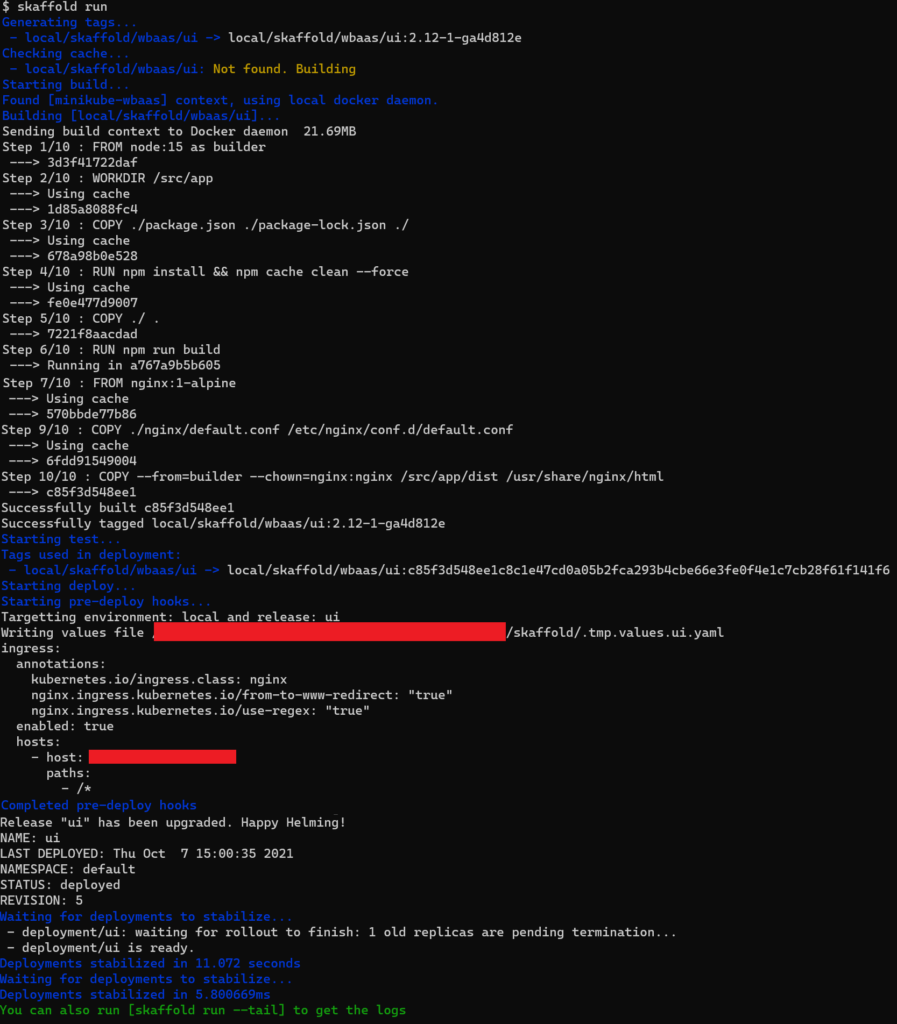
Recently I setup a small skaffold.dev development environment for a platform deployed using helmfile, deployed to a GKE cluster in production that is moving towards also having a local setup using minikube.

There is an open Github issue requesting helmfile support, so my first fear was that this wouldn’t be possible. Though after a little hacking around this seemed fairly easy by using the skaffold pre deploy hooks.

Here is a quick introduction to this stack, and a solution for using skaffold with helmfile deployments on minikube before “native” support is added.

Read more

Tech Lead Digest – August 2021

Welcome to the 4th instalment of my Wikidata & Wikibase Tech lead Digest for August 2021. For previous instalments see Q1, Q2 & July.

🧑‍🤝‍🧑Wikidata & Wikibase

The Wikidata Query Builder has been deployed. The Wikidata Query Builder provides a visual interface for building a simple Wikidata query. It is ideal for users with little or no experience in SPARQL.

The Wikibase fall release, which will be compatible with MediaWiki 1.36 will be made in the next month or so. At some point in the next 3-6 months we will likely also make a Wikibase 1.37 release. Keep an eye out on the mailing list for these.

Work is about to wrap up on the next iteration of Wikibase Federated Properties which will enable the use of properties from multiple sources at once, such as Wikidata and also the local Wikibase.

Work continues on the Wikidata Mismatch Finder. You can read more about this future tool on wikidata.org.

The campsite worked on many other things. Most notably Ladsgroup spotted that SpamBlacklist was rendering content on Wikidata twice (phabricator). This fix resulted in a rather significant improvement in save times for Wikidata, and users of Wikibase and SpamBlacklist in combination.

Read more