This entry is part 14 of 17 in the series Wikidata Map
It’s been over a year since I last posted about the Wikidata Map, and my last blog only used coordinate data from the end of 2019. At WikidataCon 2021 we finally showed off the new map tool that we have been working on, and with that came some fresh 2021 data!
It’s time for the 5th instalment of my tech lead digest posts. I switched to monthly for 2 months, but decided to back down to quarterlyish. You can find the other digests by checking out the series.
🧑🤝🧑Wikidata & Wikibase
The biggest event of note in the past months was WikidataCon 2021 which took place toward the end of October 2021. Spread over 3 days the event celebrated Wikidatas 9th birthday. We are still awaiting the report from the event to know how many folks participated, and recordings of talks will likely not be available until early 2022. At which point I’ll try to write another blog post.
Just before WikidataCon the updated strategy for Linked Open Data was published by Wikimedia Deutschland which includes sub-strategies for Wikidata and the Wikibase Ecosystem. This strategy is much easier to digest than the strategy papers published in 2019 and I highly recommend the read. Part of the Wikidata strategy talks about “sharing workload” which reminds me of some thoughts I recently had comparing Wikipedia and Wikidata editing. Wikibase has a focus on Ecosystem enablement, which I am looking forward to working on.
TheWikibase stakeholder group continues to grow and organize. A Twitter account (@wbstakeholders) now exists tweeting relevant updates. Now with over 14 organizational members and 15 individual members, the budget is now public and the group is working on getting some desired features implemented. If you are an organization or individual working in the Wikibase space, be sure to check them out! The group recently published a prioritized list of institutional requirements, and I’m happy to say that some parts of the “Automatic maintenance processes and updating cascades should work out of the box” area that scored 4 have already been tackled by the Wikidata / Wikibase teams.
A few days ago I watched a Twitch stream by Molly / GorillaWarfare where they created the Louis W. Roberts English Wikipedia page. I decided to follow along and populate the matching Wikidata item (Q109662645) with as much information as I could from the same references that were being found for the Wikipedia article.
Along the way, I remembered some of the quirks of the manual editing experience for Wikidata and noted some other things that generally might be interesting folks.
Welcome to the 4th instalment of my Wikidata & Wikibase Tech lead Digest for August 2021. For previous instalments see Q1, Q2 & July.
🧑🤝🧑Wikidata & Wikibase
The Wikidata Query Builderhas been deployed. The Wikidata Query Builder provides a visual interface for building a simple Wikidata query. It is ideal for users with little or no experience in SPARQL.
The Wikibase fall release, which will be compatible with MediaWiki 1.36 will be made in the next month or so. At some point in the next 3-6 months we will likely also make a Wikibase 1.37 release. Keep an eye out on the mailing list for these.
Work is about to wrap up on the next iteration of Wikibase Federated Properties which will enable the use of properties from multiple sources at once, such as Wikidata and also the local Wikibase.
The campsite worked on many other things. Most notably Ladsgroup spotted that SpamBlacklist was rendering content on Wikidata twice (phabricator). This fix resulted in a rather significant improvement in save times for Wikidata, and users of Wikibase and SpamBlacklist in combination.
Welcome to the third installment of my tech lead digest digest. In order to allow myself some extra space to write, and also to provide these public updates and thoughts on a more regular basis, this is now becoming a monthly digest.
I’m going to try to incorporate some of the ongoings from other Wikidata / Wikibase projects, as well as my regular digest and reading.
🧑🤝🧑Wikidata & Wikibase
Work continues on the next iteration of Wikibase Federated Properties (phabricator board). This work will allow use of properties from multiple sources at once, such as Wikidata and also the local Wikibase.
Work also continues on the Wikidata Mismatch Finder (phabricator board) which is a tool to enable finding mismatches between Wikidata’s data and data in other databases.
The Campsite continues to work on a variety of smaller tasks, in the last month including a new release of our Design System, dealing with the Query Builder security review and preparing for deployment, performing some maintenance on WBStack including preparing for 1.36 and adding Elasticsearch. We also continue to support a university team in deploying a new Property Suggester algorithm (announcement coming soon), work towards tagging all edits made from the UI (T236893), as well as many other smaller tasks.
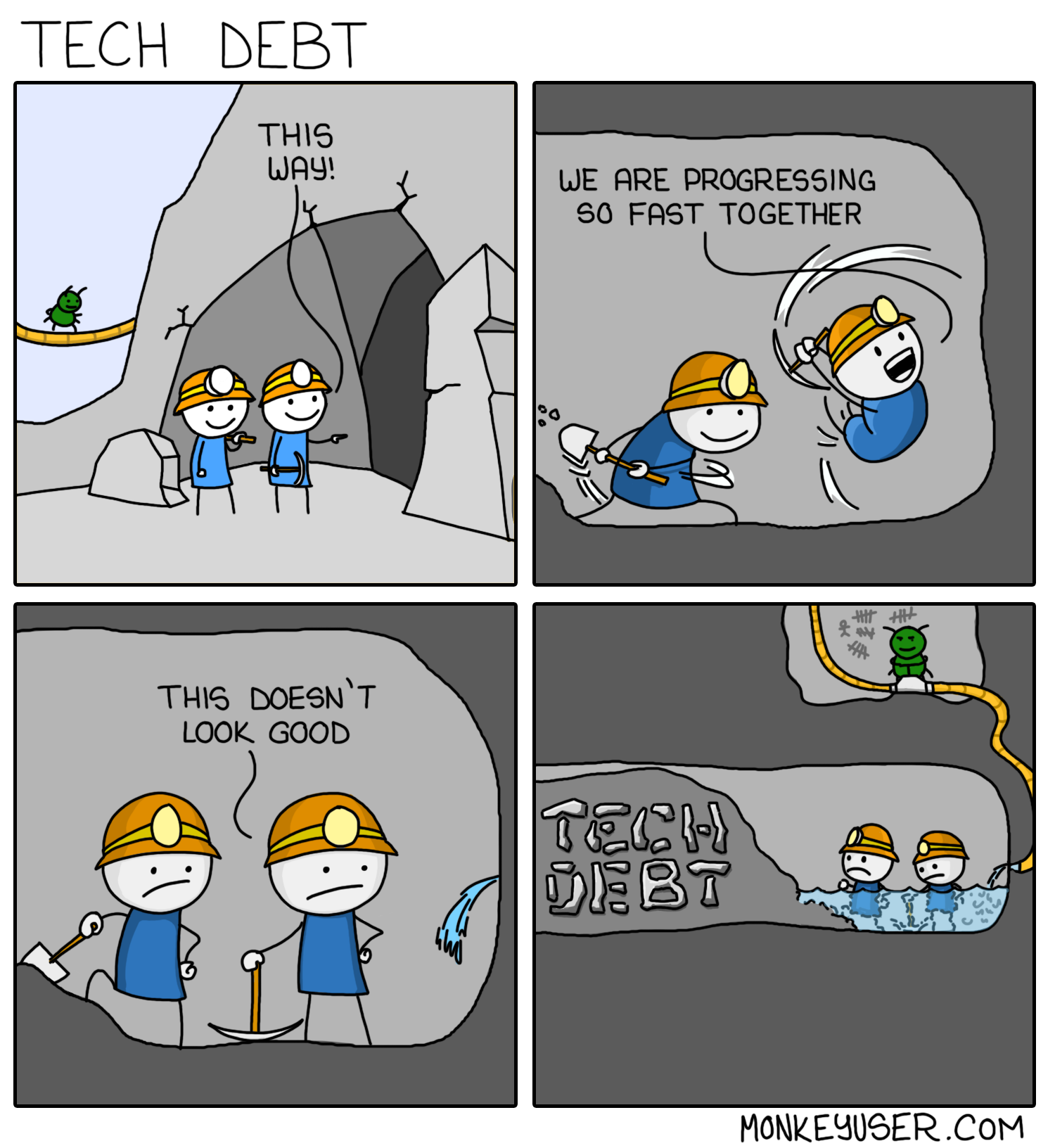
If you’re working with legacy code, chances are you’ve inherited some technical debt. Infact, if you’re working with code, chances you’re already surrounded by technical debt of varying sizes, at least by some measures.
Some believe that technical debt is something to be avoided, and that technical debt that exists is a dirty secret that should be hidden. The reality is that technical debt is a fact of life when code iteratively changes to deliver product solutions.
Striving for programming perfection is great in principle, but ultimately code is meant to deliver features, and there is always a good, better and best approach, with many other variations in-between.
Over the last year at Wikimedia Deutschland we have worked on refining how we record, triage, prioritize and tackle technical debt within the Wikidata and Wikibase product family.
There are many thoughts out there about how to track, tackle, and prioritize technical debt. This post is meant to represent the current status of the Wikidata / Wikibase team. Hopefully you find this useful.
This is the second installment of my tech lead digest digest with my tech lead hat on for the Wikidata Wikibase team.
This is a digest of my internal digest emails. These contain lots of links to reading, podcasts and general goings on that could be useful to a wider audience.
🧑🤝🧑Wikidata & Wikibase
Federated Properties, Mismatch finder & WBaaS maintenance teams have spun up from the Campsite
The “experimental” patch for Github Dependabot -> Gerrit was merged
Browser tests came up as a hot topic. A deep dive and some central analysis occurred seemingly correlation failures with “memory compaction” on VMs. This is out of our control, so we increased timeouts in some key areas.
During the first 3 months of 2021, some Wikimedia Deutschland engineers, from the Wikidata / Wikibase team, spent some time working on WBStack as part of an effort to explore the WBaaS (Wikibase as a service) topic during the year, as outlined by the development plan.
We want to make it easier for non-Wikimedia projects to set up Wikibase for the first time and to evaluate the viability of Wikibase as a Service.
This has lead to a few new Wikibase features being exposed through the WBStack dashboard for sites that run on the platform. These features are primarily features developed by the Wikibase team in 2020 and 2021. The work also brought some other quality of life improvements for the settings pages.
Here is a quick rundown of what’s new and improved.